How to Get a CDL License in 4 Easy Steps
Here’s everything you need to know about how to get your Class A CDL license:
1. Meet the basic requirements
Before you hop on the highway of earning your CDL license, it’s important that you first meet a few basic requirements.
- Meet the minimum age requirements: Most state DMVs require that you be at least 18 years old to legally operate a large commercial vehicle. The rules can vary from place to place, so be sure to check your state’s requirements.
- Have a non-commercial driver’s license: The Federal Motor Carrier Safety Association (FMCSA) requires that all CDL licensees first possess a non-commercial driver’s license. If you can operate a personal vehicle, you already have this type of legal license.
- Be a U.S. citizen or permanent resident: If you want to drive trucks in the U.S., you’ll first need to be a citizen or permanent resident. If you aren’t yet a permanent resident, it’s a good idea to speak to an immigration lawyer about what steps you’ll need to take to first gain permanent residency status and then cruise your way toward a CDL.
- Pass federally mandated standards of health: Before you apply for your CDL permit, you’ll need to complete a Department of Transportation (DOT) medical examination with a licensed healthcare practitioner. At this exam, the DOT-approved Certified Medical Examiner will assess if your eyesight, hearing, and other health qualities will allow you to effectively and safely perform the varied responsibilities that come with being a professional trucker. At TDI, we bring one of these physicians straight to our students and arrange the DOT exam for them to make this process as quick and easy as possible.
- Have a good driving record: The FMCSA, along with your state’s DMV, want to make sure that you understand the basics of how to operate a vehicle and share public roads before issuing you a CDL. That’s why it’s important that you already have a good driving record with your non-commercial license.
2. Obtain a CDL permit
Just like when you were training to receive your non-commercial driver’s license, you’ll need to get a Commercial Learner’s Permit (CLP) before you can earn your CDL license. This permit will give you legal permission to operate a truck or bus so long as a licensed CDL driver sits next to you in the passenger seat.
Be sure to bring documents proving that you meet all the minimum requirements—including your passport or green card showing permanent residency, as well as documentation showing you passed your DOT physical exam—to your state’s DMV when you apply for your CDL permit. Most states require a birth certificate, two proofs of residency, and a Social Security card if you do not have a REAL ID. You’ll likely also need to pay a fee between $10-40 to your DMV, and you will need to pass a written exam to earn the permit. While many truck driving schools require you to complete this process on your own before enrolling, TDI helps our students study for the permit exam as part of their CDL training.
3. Train with professional truckers
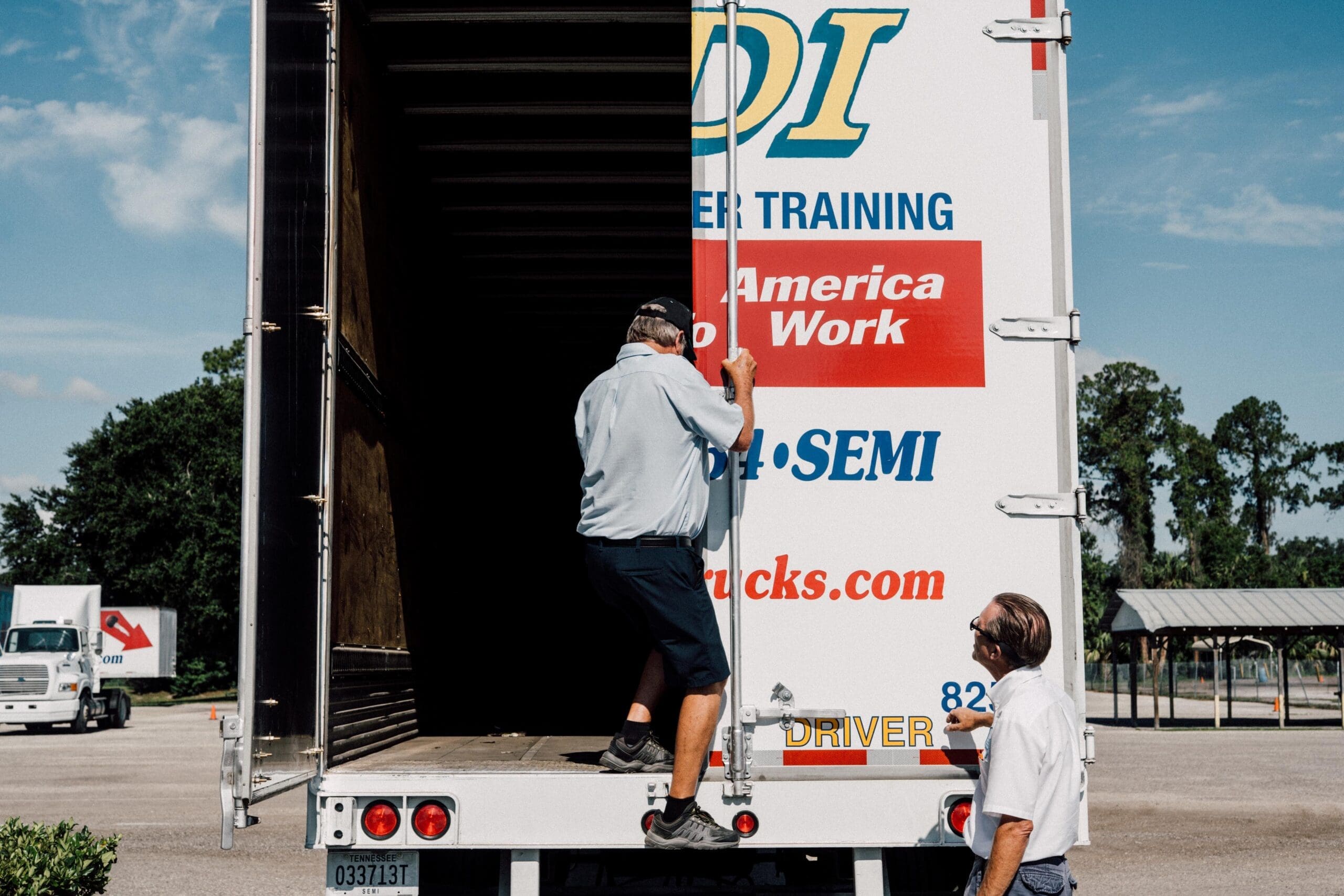
The next step in how to get a CDL license is to take truck driving lessons through a registered training provider. A high-quality truck driving school like TDI will teach you both the classroom knowledge and the hands-on skills necessary to become an excellent trucker. There are a few things that set Truck Driver Institute apart from other schools as we strive to give students the best possible education:
- Training on real, late-model trucks, rather than outdated vehicles, broken-down junkers, or simulators.
- Options for automatic or manual transmission, rather than only automatic, which legally restricts you from driving on a manual transmission.
- Classes starting every week, rather than waiting multiple weeks or months for a new CDL class you can join.
- A 15-day program of daytime, weekday classes, rather than nighttime-only classes that are less safe for new drivers or weekend-only training that is less effective and takes significantly longer.
- Permanent campuses across the country, which include expansive driving ranges to practice on, fully equipped classrooms, and dedicated staff, rather than temporary trailers that often lack these benefits.
- Small classroom sizes to provide individual attention and assistance.
4. Pass your CDL exam
Once you’ve finished your training, it’s time to take the CDL license exam. The CDL Class A test consists of both a written exam and a driving test. Both tests will evaluate your understanding of topics like managing cargo, following traffic laws, backing up trucks, and merging onto highways.
At TDI, we provide on-site testing at our campuses in every state where it is legally allowed. That means you can test right away after training in familiar territory, instead of having to wait weeks or even months to schedule an exam somewhere else. Many TDI students pass the first time with flying colors because of our thorough training, including multiple run-throughs of what you’ll face in the exam with instructors who can help you identify and correct any issues as you practice. But just in case you need another try, we include up to three free on-site attempts at the CDL exam as part of your training at all schools except those in Alabama.